
My scalp is neither oily nor dry. Now, if you are a lucky one like me and don’t have any issues with oily or dry scalp, simply save your time. Skip directly to the Melange Elixir hair oil review.
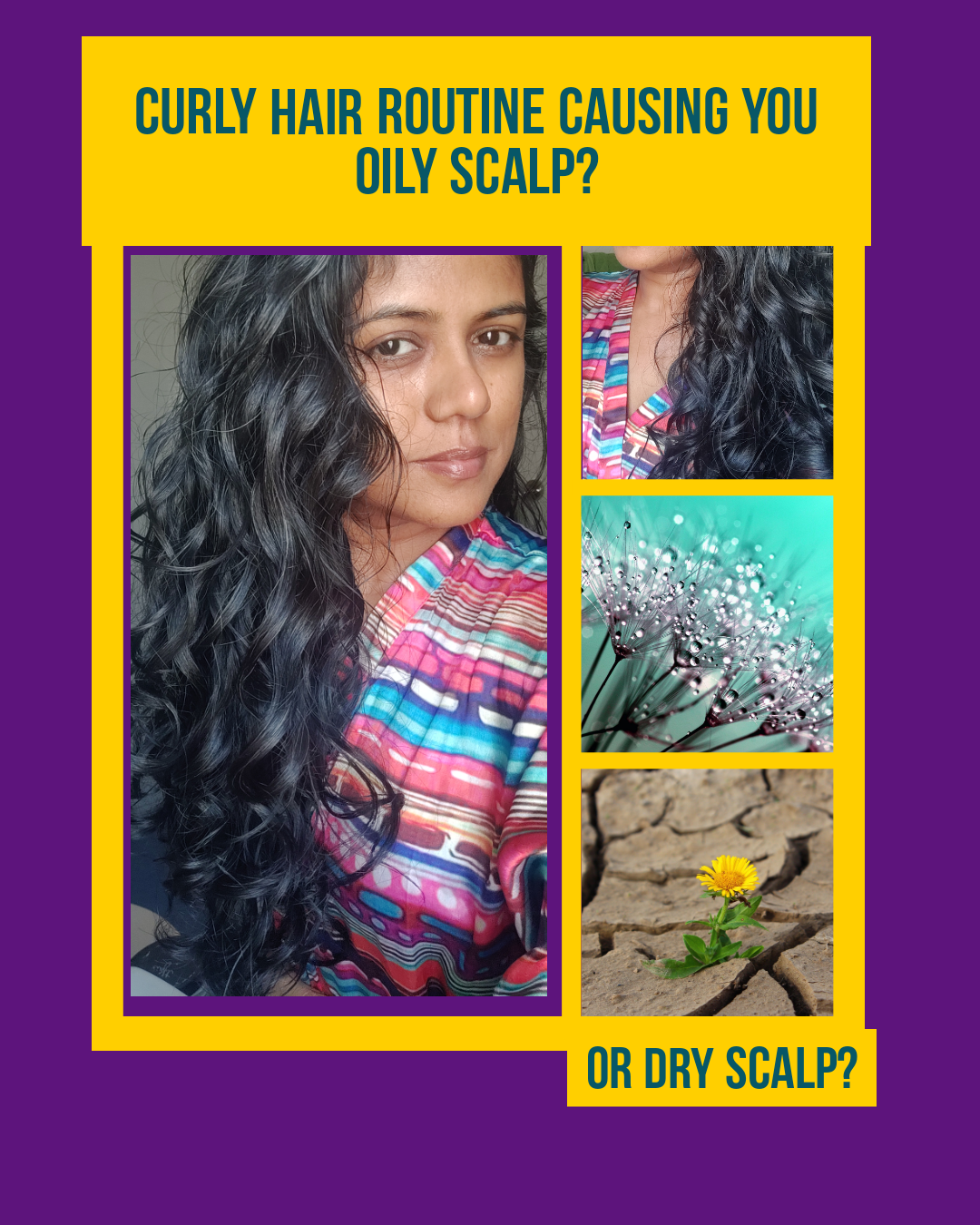
But, if your curly hair routine is causing your scalp to feel oily or dry, you are my audience – please read on.
A Greasy Background 🙂
My South-Indian background always recommended well-oiled hair for good hair growth. Alas, the mothers and the grand-mothers took this quite literally, sometimes well-oiled sometimes meant well-drenched hair in oil. I am all for “Shiro Abhyanga”, the Ayurvedic practice of treating scalp and hair to help heal eyes, skin, hair and scalp issues. Of course, it calms the nerves. But I should admit this is best done once in a blue moon, just kidding. Take the advice of your Ayurvedic doctor who will advise you the right therapies based on your body constitution and hair type. But, I digress.
Shikakai – the brown goop
Coming back, it was a practice in my house to coax (read that as punish) me to keep my hair oiled at all times. Probably that is one of the reasons my hair is greying slowly now or that it I have always had dense hair. Regardless, the moment I found sulfate shampoos available that will wash your hair so spic and span, I have used them to remove all grease from my hair. I am sure you will not relate to this sentence, but still read it as trivia information – I have bought sachets of shampoo called “Chik Shampoo”, India’s first shampoo available in tiny sachets (single use packs), there was also something called Velvette. These shampoos were a blessing to many who dreaded the weekly assault on our hair with Shikakai, the traditional shampoo :). To some of the people from other worlds – Shikakai (Acacia concinna) is a herb native to Asia. The leaves, bark and fruits of this plant are air-dried and powdered and used as hair cleanser. A brown goop (Shikakai powder mixed with water sometimes with Amla, the Indian gooseberry powder) was slathered on our wet scalp and hair and scrubbed to remove the greasiness. Shikahai would have a nutty smell and the grainy, gooey goop would run down your face and burn your eyes. I HATED it. Little did I know Shikakai’s benefits then. People off late have woken up to the magic of this non-sulfate, low pH, less saponifying, mild cleanser and there is a complete new segment offering herbal hair care with Shikakai, Bhringaraj, Amla, Henna and many other products. I digress again.
So the point was – whatever natural, herbal stuff I used in my childhood did NOT deplete my hair and scalp of its natural oils. Scalp felt clean and hair lustrous. But I had moved on. Years and years of lathering saponifying, sulfate-shampoos did it for me. And I thought the only way to detangled hair was a strong shampoo that would remove all oils from the scalp. Did you think so too?
What natural hair care entails?
Thanks to embarking on my #naturalhairjourney with the #curlygirlmethod – it helped me realize that natural sebum is important for the health of the hair.
Just to set the context right – there is something called the “Sebum only” method, another branch of the natural hair journey that advocates no-shampoo aka no-washing. Whaaat!?
Sebum only? Nothing else.
You read that right, no-washing-of-hair-at-all. Does that mean no products, no hair masks, no dry shampoos, no conditioners..yada yada yada. Right, no water also. Just let your hair be.
“Sebum only” as the meaning goes is (literally) letting your hair thriving on natural sebum, nothing else. Your body maintains an ecosystem that helps hair grow (believe me, your hair grows even if you don’t do anything), by producing sebum. The quantity of sebum produced on the scalp varies per person and is dependent on many things – gender, hormones, age, stress, whether you workout/sweat, whether you cleanse with mild/strong shampoo, how often do you cleanse/scrub scalp, etc. Sebum production is balanced by Sebaceous glands, (oil-producing gland) present on scalp and skin. The scalp cells open via hair follicles and sebum produced thus coats each hair strand, thereby lubricating the scalp and hair. (This goes for the overall skin cells too.)
Enough about the Biology, people who opt for this method brush, scritch and preen hair to ensure that the sebum spreads down the hair shaft and length and removes any dead cells or dust from the scalp. And any excess sebum (visible grease) would be dabbed by a microfiber towel or paper towels. The logic is not very simple – if you don’t wash, you don’t deplete the natural sebum. If you don’t deplete the natural oils, nothing extra is produced and thus you don’t have anything to wash out. Phew!
If you really interested to know how Sebum only, also called “Sebum coating” works, check the video here and read here. This is all part of #nopoo method.
This begs the question:
Doesn’t excessive sebum cause make hair greasy?
Natural sebum on the scalp helps condition the hair, protect it by forming a coating on it, adds shine, prevents it from over-exposure to elements and dust and finally stops the hair from getting dry or brittle and thus any hair breakage. Sebum thus produced also maintains the pH of the scalp and aids in hair growth. Excessive sebum could be caused by our hair and scalp being extra dry, at times, caused due to a shampoo with harsh surfactants like lauryl sulfates (Read here to know what surfactants are harsh on your scalp here). These actually remove your natural oils, thereby drying out your skin cells. And your body reacts with producing extra sebum to compensate – the results that follow…oily scalp that could affect hair growth, clogged hair follicles and scalp prone to infections.
There is a case of excess sebum causing hair loss. You can read about hair loss related issues here.
If you are a natural hair journey geek, this report by on “Hair Cleansing” can interest you.
Can shampooing strip natural oils from the scalp?
Yes, some shampoos can do that.
I am sure you know this already, but for the benefit of many, let me repeat – Sulfate-based shampoos and products containing drying alcohols can dry out the scalp stripping its natural oils. Technically a shampoo is formulated to remove any dirt, dust, sweat and sebum. But, the more you try for that squeaky, clean-scalp-feeling, that means dry hair and thus you are inviting scalp dryness. Let’s remember, excessive shampooing can increase sebum production. Dry scalp causes your scalp’s sebum production to go into overdrive and everything that I had warned you about excess sebum will happen. If you are worried about excessively oily scalp, slow down your cleansing as in reduce the frequency of washing your hair, use a gentler shampoo and use a clarifying shampoo once a month or as per your hair needs and your scalp will thank you.
If shampooing strips oils from the scalp, how should one deal with “dry scalp”?
Simple…apply oil.
Haha, I know what you are thinking she is leading us into the rabbit hole again. Well Alice, I can’t tell what’s right for your hair until you try it yourself.
Let’s go over the premise again:
Natural sebum == Good hair health
Excess sebum == Bad hair health leading to hair fall, scalp infections and added issues
Your scalp will do what’s necessary to balance the sebum, unless you upset the apple cart. If you feel that your scalp is a little dry, simply massage your scalp with a few drops of oil, at least twice a day. This dilates the blood vessels under your scalp improving circulation to the hair follicles, aids in hair growth too. But, if you are one of those wary ones of thinking that oils can make your scalp greasy, do this as a pre-poo treatment and wash it off. A good sulfate-free (curly girl approved) shampoo will help remove this.
But, if you have Oily scalp, should you still oil your hair?
You can!
That’s the beauty of the natural hair journey, unlike the Curly Girl Method, there are no said rules.
Your options are to use natural, cold-pressed oils or essential oils (there are some store-bought options too) for you. I would advise against formulating your own concoction unless you know all about EO and Carrier oils. I don’t, I trust the real formulators. Choose something that is not very heavy that you can easily remove with a cleanser. Check for hair oil with anti-bacterial properties, if your scalp is generally prone to greasiness, these ingredients will combat infections, if any. Do check posts by @hif3licia @themestizamuse for oil mixes to heal scalp infections and hair growth.
What about fine hair? Doesn’t oiling make it overly greasy?
I hear you my fine-hair, thin hair aka low hair density friends, fear not – oiling hair isn’t as bad as you think.
Choose oils that are light, something that can get quickly absorbed into your strands. I have heard that Argan oil is quite light and can work quite well for fine hair. I have tried Grapeseed oil on my fine hair and it gets quickly absorbed into my strands. A best way to avoid any greasiness is to use oils as pre-poo treatments only, don’t use it for SOTC or any other finishing (LOG or LOG), if you feel that oils can weigh your hair down.
Does hair oiling work for everyone? Advantages? Disadvantages?
Good news!
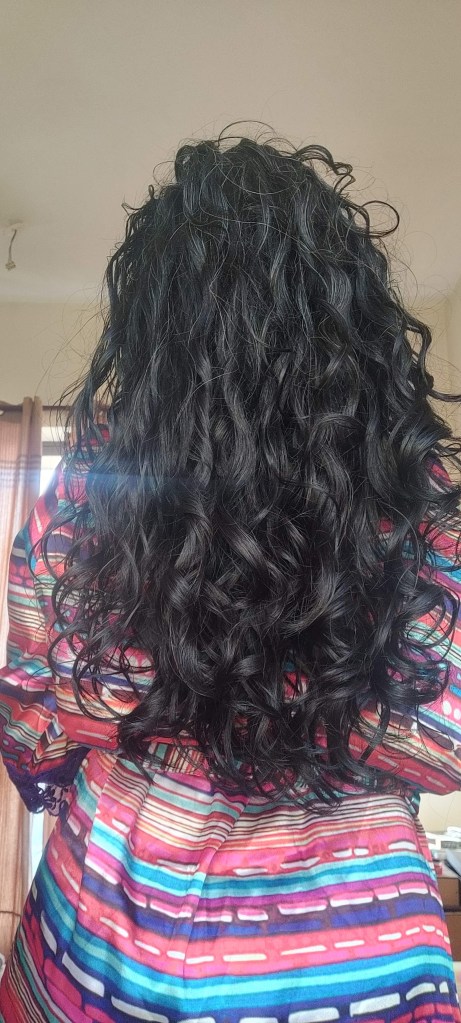
It works for my low porosity, medium density, #2b2cwavyhair. I found this out by experimenting. But you would have to experiment too, don’t accept anyone’s advice or experiences.
Some advantages of oiling include avoiding dry scalp issues and improved blood circulation to hair follicles are:
- Oiling keeps a check on dandruff and flakes
- Oiling maintains the shine on your hair
- Regular oiling prevents hair getting brittle and aids in growth.
- Oils keep the frizz away – use a few drops to smoothe out the flyaways.
- Oils can help ease those dreadful knots and help detangle your hair.
- Oils can help SOTC – scrunch out the gel cast and give that finishing touch to your hair.
Some disadvantages:
- Some oils can weigh your hair down
- Oiling your hair and stepping out without covering your scalp is a recipe for disaster – your hair and scalp will attract environmental dirt and dust and pollutants – you don’t want to try this.
- Leaving the oils in your hair or extending your wash routines means the collected sebum can clog your hair follicles. This affects hair growth.
Sometimes hair routines that we follow, given humid conditions in most parts of our country can make your scalp dry, itchy, even itrritated with boils or bumps.
Besides keeping the scalp clean and moisturized, it is equally important to ensure that it is well-nourished and not dry.
And hence oiling the scalp.
How do you take care of your scalp health? How often do you oil?
Do let me know what worked for your scalp and hair type so that it may help others too. Thank you for reading.
 Making Waves Easy