
I know that I am about the stir the hornets’ nest here, but hey, I am a fine, low density, thinning wavy-haired lady…and I don’t like my scalp peeking. <Sniff> This is going to be a long post. (Estimated reading time: 15 minutes)
Why I started CGM?
At the outset, let me be very clear. Right from the word go, I knew my hair goals – healthy hair + hair growth + less hair fall (The latter has been quite a steep hill goal, but I am getting there.) And, just a few months into my Curly Girl Method (CGM) journey, it was clearly proven that my hair would NOT turn curly. I had cut my hair thrice, even did a BIG CHOP hoping the newly-grown hair would get curly. Why shouldn’t it? I was doing everything natural – I mean, CG-approved products, oil massages, taming the curls, deep conditioning, new styling techniques…and the works, GAH!
But, there was my first lesson: Hair does not change texture. If someone tells you that your wavy hair will become curly, they are selling you a dream.
Everything that I did provoked the opposite. Finger coil, finger coil, finger coil…50 times!
DON’T DO THIS! Not worth it, especially if you are a wavy. You are forcing your hair to be something that they naturally are not! I wanted my have to curl from the roots, so I applied stylers as close to the roots as possible. Well, they said don’t apply products on the scalp and I was careful. But, I didn’t take into account that products may land on my scalp when I squished them into my hair. And my hair started thinning…from that point.
And here was my second lesson: Scalp health is actually hair health, if your scalp is not clean your hair won’t be healthy.
If you can relate to any of the following observations about your hair, read on: #longpostalert
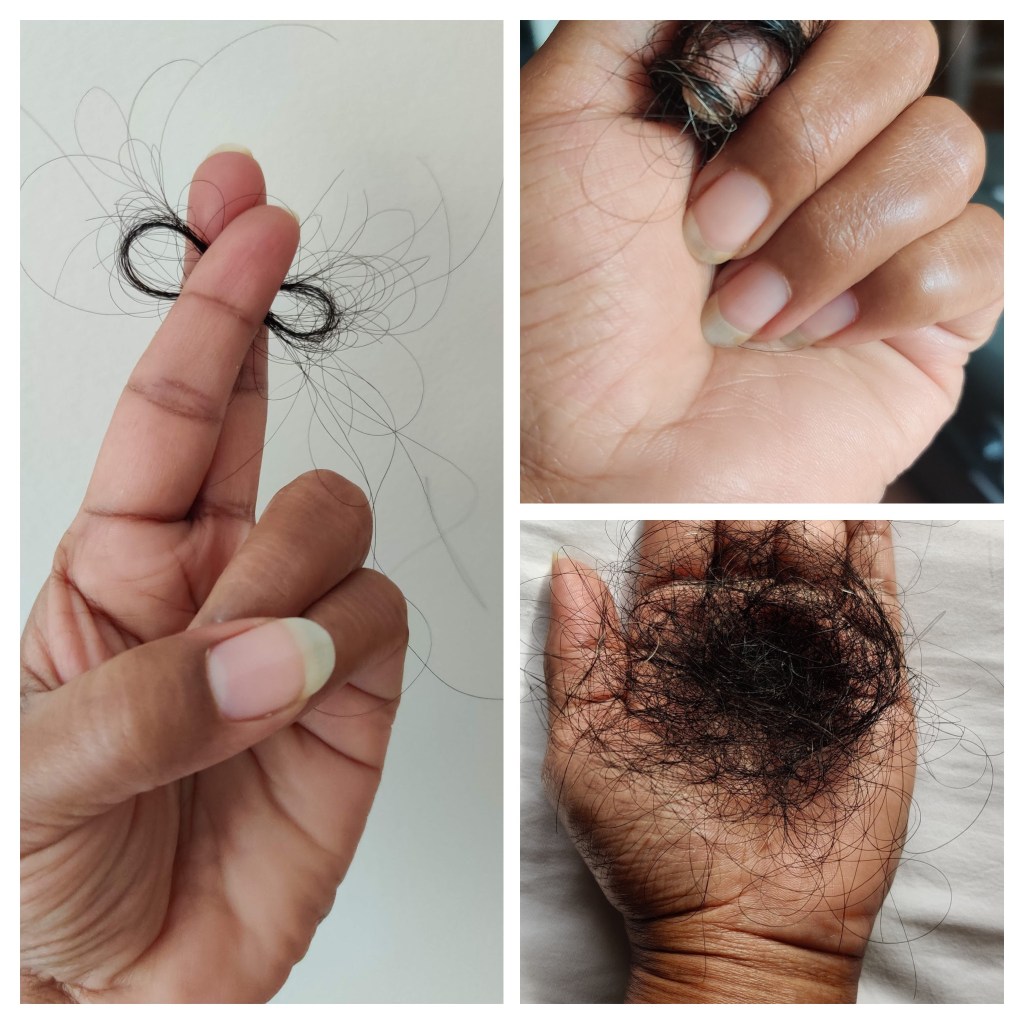
- Wash days mean too much hair shedding.
- Can count losing about 100 strands of hair per day, but I think it is more.
- Scared to wash hair as I feel I will have nothing left on my scalp after I wash.
- I tried everything – deep condition every week, Cod liver oil, Vitamin D, collagen drinks, hair vitamin gummies, Fenugreek, some thick-haired-curly’s Granny’s 140-year old home-remedy #hairtip to boil the hell out of curry leaves in coconut oil and apply it…but hair keeps falling.
- Hair shedding everywhere I go, it’s autumn on my scalp all the time!
- Post hair wash, the shower area looks like a battle of hair

Fair Warning:
There are 101 reasons for hair fall, hair shedding and hair breakage. You are not a hair expert (and if you are, please read through and leave your thoughts in the comments below) and “Googling” for remedies is not going to help you either. But still, if you have clear indicators of hair loss due to: Postpartum, PCOD, menopause, hormone imbalances, thyroid issues, severe weight fluctuations, crash dieting, scalp issues including dermatitis, fungal infections, itching, scarring and severe dandruff, autoimmune diseases, etc., DO NOT check your symptoms on WebMD or seek advice on your friendly-girl-forums. PLEASE SEEK THE ADVICE OF A DERMATOLOGIST OR MEDICAL DOCTOR.
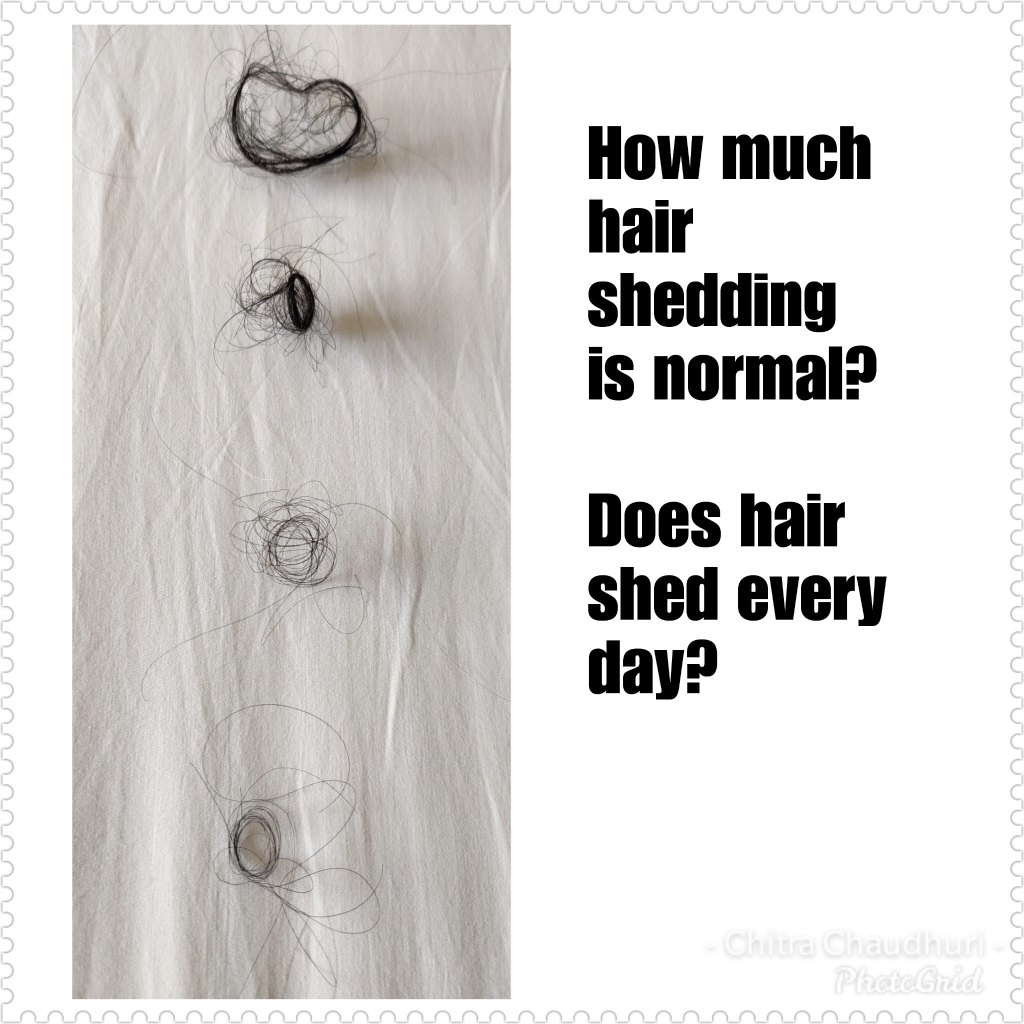
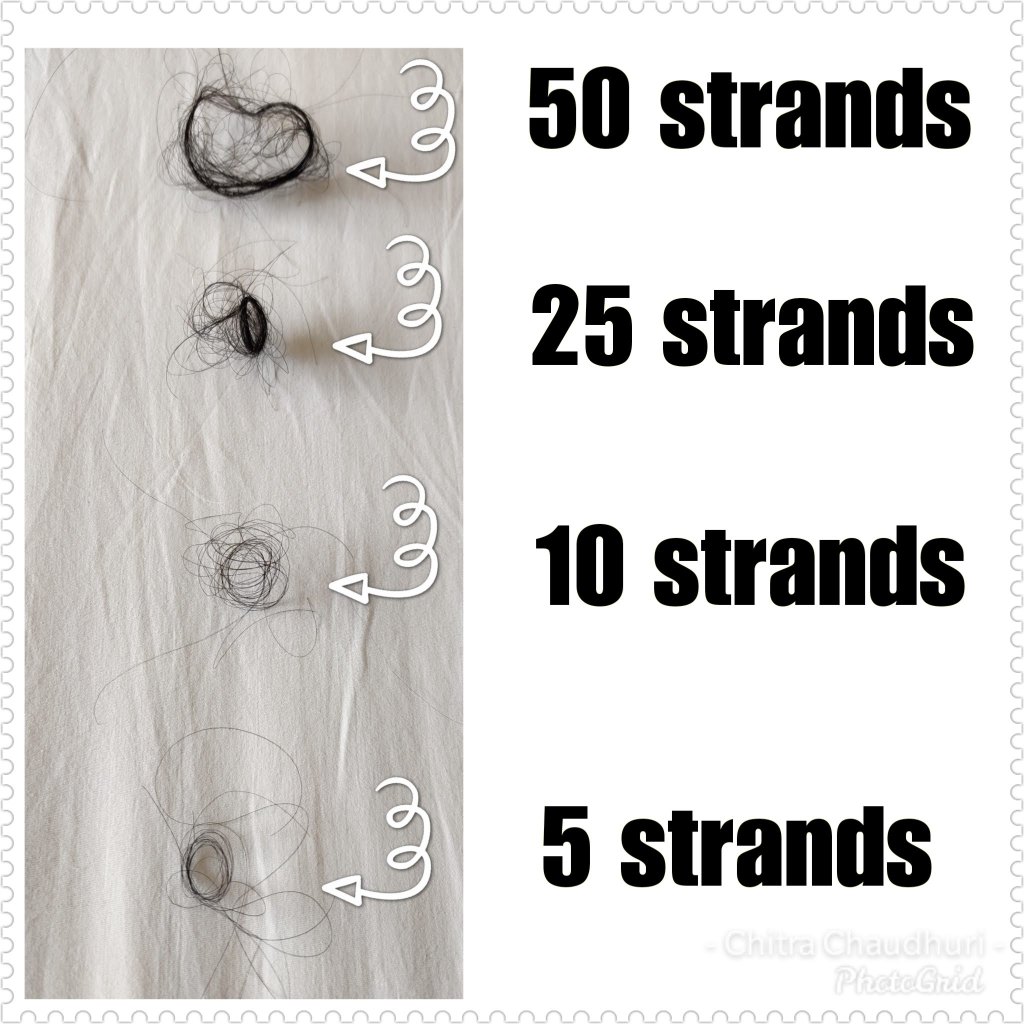
It’s ok to shed about 50-100 strands a day for a normal person with good health.
American Academy of Dermatalogy
Some Basics About Hair Fall: Hair Shedding, Hair Loss & Hair Breakage
Hair shedding (Telogen Effluvium) is not exactly Hair loss
According to the American Academy of Dermatology (AAD):
- Hair shedding is associated with a stressor (anything that causes tension & anxiety) and stops on its own.
- Hair shedding can be excessive when suffering from one of these stressors –
- sudden loss of body weight
- stress due to an emotional loss (job, person, pet or divorce)
- given birth recently and hormonal changes
- medical conditions including post-operative health, recovering from an illness
- hormonal changes after stopping birth control pills
- Hair shedding is temporary and reduces once the stressor is removed. As the body readjusts, the excessive shedding also reduces.
Hair loss (Anagen Effluvium) can be temporary or permanent
Again as per American Academy of Dermatology (AAD):
- Hair loss is when hair stops growing.
- Hair loss can be due to following causes-
- hereditary hair loss due to the inherent genetic disposition, includes hairline receding, hair at the temples reducing, etc.
- immune system attacks on hair follicles causing hair to fall out
- medications or drug-induced hair loss
- hairstyles causing hair loss called “traction alopecia” where hair loss is due to the trauma to the hair follicles by the constant pulling of hair
- chemicals, heat and harsh hair products that weaken hair and cause it to fall out
- And finally…compulsion to pull out one’s hair. Yes, this is a disorder called “Trichotillomania” and is treatable.
- Hair loss can be temporary or permanent. Some conditions can be treated, but only Dermatologists and Trichologists can help diagnose and prescribe the right treatment for hair loss conditions.
Hair breakage can be due to hair shedding or hair loss
A certified Trichologist & Cosmetologist, Sophia Emmanuel describes: Hair breakage is a fracture on any area of the hair shaft. If there are short pieces coming out when you brush or comb your hair, you are experiencing hair breakage.
- Hair breakage is exactly as it sounds – breaking of hair into short pieces. Unlike hair strands out falling during hair loss (with a hair bulb at the end), hair breakage results in snapped bits of hair
- Lengths of hair strands will not be the same as the length of a healthy strand of your hair
- Hair strands may be dry or brittle or may have split ends
- Hair breakage can be caused by:
- dry or brittle hair
- hair damaged by excessive heat
- hair damaged by chemical treatments or over-processed hair
- hair tugging caused by excessive pulling or twirling your hair
- transitioning hair after using hair relaxers
- hair styles that tend to pull or tug hair tightly
- And finally…nutritional imbalances can also cause hair scales to fall apart and feel dry, frizz out and break.
Now that we know the causes of hair fall, let’s debunk some hair myths.
Disclaimer:
I am not a hair expert, a hair doctor or hair specialist. The views expressed here are based on my observations on wavy and slightly-curly hair, my wavy-hair experiences and my learning. As mentioned in the “Fair Warning” above, please seek the advice of a medical doctor to treat excessive hair loss, hair fall or hair breakage symptoms.
Debunking Hair fall Myths
Myth: Curly Girl Method is causing my hair to fall out
Reality: Curly Girl Method is a process to take care of your naturally textured, curly and wavy hair. Though you may be using CG-approved sulfate-free and silicone-free products with plant-based ingredients, you should know by now products can build up on your hair. Most of these products, other than clarifying shampoos have mild surfactants. You need more friction to scrub and cleanse your scalp. In your previous hair-life (Not an actual term, I’ve coined this), when you used your regular shampoos the Anionic surfactants (Sodium Laureth Sulphate & Sodium Lauryl Sulphate) produced a lot of lather and detergent-induced cleaning to deep clean your hair. Now with CGM, you have to ensure that you cleanse your scalp well, so that the follicles do not clog up.
Remedy for wavy hair: Reduce co-washing. You need a good sulfate-based shampoo to remove build up.
Remedy for curly hair: Regular scalp scrubbing and clarifying can help remove build up. Avoid putting products on your scalp, unless the product claims it is ok to be applied on the scalp.
Myth: Curly Girl Method is making me lose a lot of hair while washing
Reality: Curly Girl Method does not recommend brushing out the hair. Let’s do a simple math: If you generally lose 50-100 strands of hair a day (normal for a healthy person), a wash after 3 days means losing about 150-300 strands. This can seem a lot. With straight or chemically-relaxed hair, it’s easy to slide your brush through your hair and these strands can easily escape and fall out while brushing. But our hair texture traps these fallen hair strands and when we wash they seem to come out in bunches and seems like more hair fall. Another thing that we easily dismiss, hair stretches when it is wet. Some 300 strands of long, stretched hair (remember curly hair shrinks and seems shorter) in the shower drain seems like a LOT of hair. Gosh!
Remedy for wavy hair: Prepoo, finger-detangle hair before shampooing. Here is my IG post on how to finger-detangle to easily remove knots. If you are comfortable with dry brushing, use a detangler brush (Flexybrush, Tangle Teezer, etc.) to ease out the tangles. And if you are experiencing hair breakage, avoid wet brushing. Do not use a comb on your wet hair. Wet hair can be weak and the bonds can be fragile, so it is best to use your fingers only to distribute products and style hair.
Remedy for curly hair: Prepoo and detangle hair before shampooing. If dry brushing works for you, try that or detangle gently when your hair is wet and nicely moisturized with a conditioner having good slip.
Myth: Curly Girl Method is thinning my hair out. I can see my scalp clearly.
Reality: Curly Girl Method causes hair to clump, that is, curls and waves gather together to form a curl pattern. The more the strands clump together, the more definition you can see in your hair. Clumped hair looks shiny (light is reflected in the lifted curves) and healthy. It’s a common practice to drool over the defined, shiny curls of your favorite insta-curlies and dream of achieving such ‘definition’ in your hair too. Mea culpa! @powerdomi shiny clumps have always done that to me. On regular, non-CGM hair, the hair strands are free to fall in any direction and are not forced to gather together, in fact, the easier they fall, the more silky and smooth they appear. In stark contrast, curly and wavy hair is encouraged to clump together, with and without products.
How clumping actually happens?
This is quite interesting, pay attention please:
- You use a wide-tooth comb to remove any tangles in hair so that there is no friction between strands.
- You add a lot of water while styling. Water (a dash of cold water especially at end of shower) closes scales on hair, removes all frizz and smoothes hair into clumps while styling.
- You carefully style your hair with products – squish to condish for extra moisture (deep conditioner & leave in), curl enhancer (curl cream) and gel to set and hold that clump in place.
Hair thus gathered in clumps not just stay together. Over time, they even grow together. Observe the next time you wash your hair and see how these clumps gather all the way till the roots. And then you wonder why your scalp is visible? I am not saying that clumping is causing your hair to thin, but it may make your scalp to peek. But can this be easily remedied.
Remedy for wavy hair: Don’t apply products closer to the roots, especially avoid products that may be too heavy for your hair. Apply products in your hair when it is soaking wet, preferably in the shower. That way your hair will be uniformly wet and product can get distributed throughout the strands. And before drying or diffusing your hair, distribute (adjust) your hair clumps on your head. #chitratips did you know how your hair falls while it is wet is exactly how it will look on drying? So set your wet strands before drying so as to cover the scalp from peeking. Root clipping also helps add volume and cover these peeking scalp spots.
Remedy for curly hair: Fluff nicely to break the clumps that form close to the roots and the scalp spots will get covered.
Myth: Curly Girl Method stylers – Gels especially are making my hair dry and brittle
Reality: Let’s be honest, though you may not admit it. You started CGM because of some previous damage that may have been caused by a relaxer or chemical treatment or excessive heat or coloring. You didn’t think too much about it while seeing your satisfyingly-silky, styled, shiny, swaying straight hair. Tch, tch! If your hair was “virgin” or just slightly frizzy, the damage from these straightening treatments would have been minimal. Starting CGM for such hair would have revived your natural hair in a few months. But for extremely frizzy, dry hair or if your hair had been delicate to begin with, the chemical straightening would have done ample damage, making it brittle and prone to breakage. I don’t have to spell out what the chemical treatments would have done to naturally curly, tightly coiled, over-processed or even bleached, regularly coloured hair. Magnify and multiply the damage that you read in the previous sentences. Now think again, do you still feel that the CGM stylers are making your hair dry and brittle? With CGM, you hair is being encouraged to overcome these issues, albeit naturally.
Remedy for wavy and curly hair: Stylers, especially gel is an important part of styling wavy and curly hair. It not only keeps the curl pattern from disrupting, but also seals in the optimum moisture that is required for your hair to feel healthy. So, don’t skip that gel. It’s ok to go without stylers sometimes but not often.
Some Don’ts If You’re Experiencing Hair Fall
If you have started CGM or planning to start the CGM and having hair loss issues, here are some DON’Ts:
- Don’t take your own medicines or supplements to combat hair loss. A study published on the role of vitamins and micronutrients in hair loss shows conflicting results, also warns of how increased intake of vitamins and minerals can cause toxicity and lead to hair loss.
- Don’t go back to using your regular non-CGM routines because you liked those results better. Well, a sulfate-shampoo may help clean your scalp well, the same cannot be said of your silicone-conditioner. You are undoing all the efforts you put in to keep your hair growth journey natural.
- Don’t opt for a co-wash just because it says washing & conditioning hair is easily done in one go. If you find your scalp feeling itchy or getting irritated, it is not for you. Simply shampoo! Co-washing itself does not cause hair loss, but your scalp may be sensitive to the co-wash ingredients leading to build up and flaking.
- Don’t go overboard with clarifying wash or claywash detox in your wash routine. You may be drying out your scalp and hair, stripping it of its natural sebum. This can cause excess production of sebum, maybe even lead to dandruff or flaking.
- Don’t put your hair up in a pineapple if you get tension headaches. It is likely that pulling up all your hair is adding tension on the hairline. Same goes for wearing your hair in a pineapple at night, opt to wear a bonnet instead or wrap a silk scarf around your hair to protect it.
- Don’t simply extend your wash day because you can or because you saw someone else write about how they wash their hair just once a week. You are putting your scalp health on overdrive. Maybe it doesn’t look greasy and you are able to get by with refreshing every day. But know that you are inviting scalp issues – product buildup, maybe creating a fertile place for microbial growth.
- Don’t simply get frustrated and give up. Identify your hair issues, identify the causes and address them. If it is not the topical products causing hair fall, look within, work on your stress levels. Sometimes even hard water may be causing those hair issues. So take time to understand your hair problems.
My take on hair loss after starting CGM
Since you have read so far, you may be wondering why I haven’t mentioned about what can help stop hair loss.
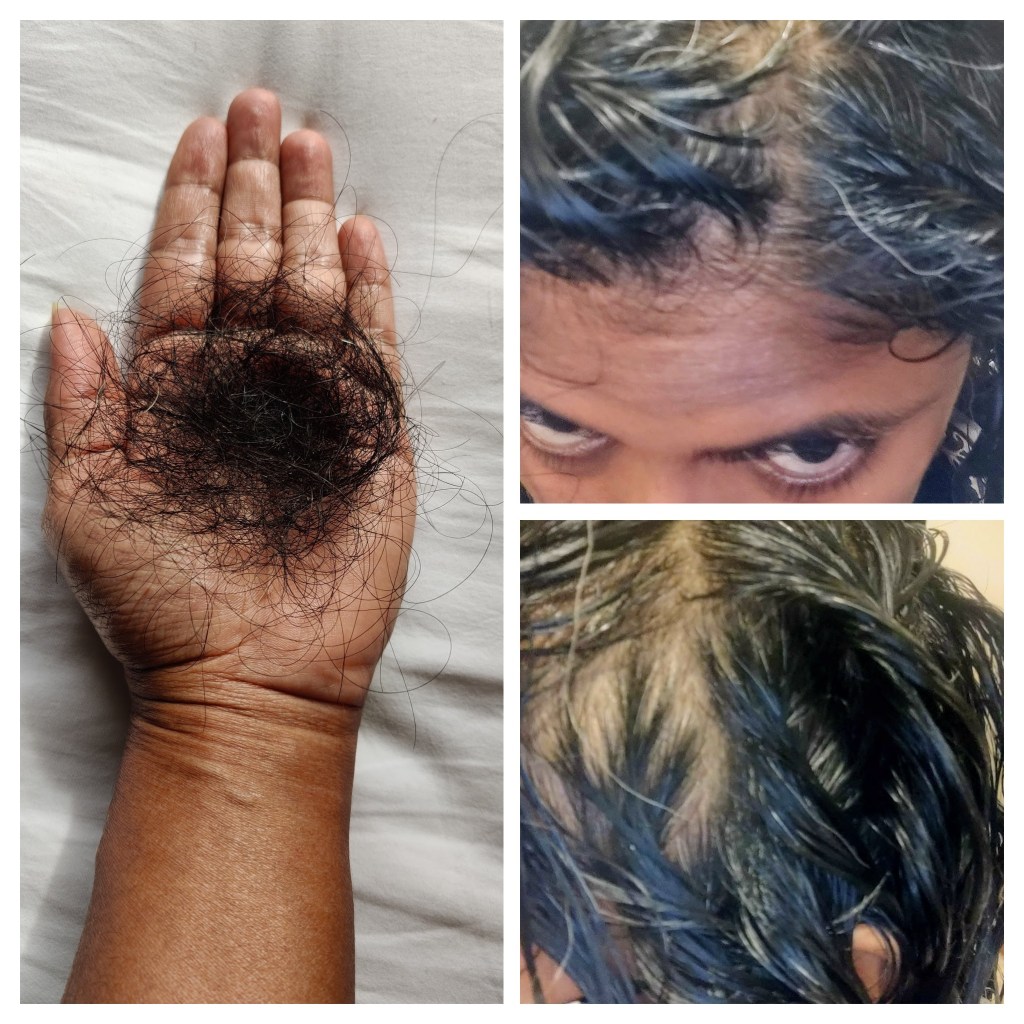
I have shared a comprehensive list of factors that cause hair thinning, hair shedding, hair breakage and hair loss above. There is no magic cure to hair fall! I have hormonal imbalances, PCOS and perimenopausal factors contributing to hair shedding, sometimes stress is a strong contender here. But I am not the right person to give you medical or nutritional advice. Please rely only on trusted professionals to help you diagnose your hair and health issues and offer valid advice.
Trust your gut and listen to your hair. Blindly co-washing because your curly friend is doing that may not work for you. Same goes for no-poo, if you are a wavy, no-poo is a NO-NO! Everyone’s hair and scalp is different, please take that into account when you buy and try products on your hair. Take into account how your hair texture, density and porosity is to know if co-washing will work for your hair or if only clarifying will do. Check my wavy hair guide to learn more about hair properties.
Don’t be bogged down that your hair is thinning. Stress is a big factor in hair shedding. If you think that you are losing more hair than what is growing back on your scalp, visit a Dermatologist. S/he will diagnose your scalp to know what stage your hair is growing (Anagen, Catagen, Telogen) and guide you on the appropriate hair care. And if the diagnosis indicates a hair shedding (telogen effluvium) issue, know that shedding will stop once the stressor stops. So work towards it.
Hair loss is not the end of the world. I cannot stress more upon this, in the current Corona calamity, we are all aware of our life’s priorities. But still for the many who have written to me that hair loss has made you feel less of yourself, made you feel less attractive, made you experience a sense of loss, youthfulness, shame or even a loss of sexuality – please know that you are BEAUTIFUL! Your hair doesn’t make you less or more beautiful. You make everything beautiful! Stay blessed!
Finally, what’s the science behing hair fall?
If you are really, really interested to know:
- Each follicle of hair goes through a life cycle: anagen (actively growing), catagen (transitioning), telogen (pre-shedding). And resumes the cycle with growing again.
- Not all hair follicles go through the same phase at the same time.
- In healthy people, hair grows at a rate of 0.35 – 0.45 mm per day (about half an inch each month).
- 85% of hair on the scalp are in the anagen phase at any given time, and this phase can last about 3 years. (So don’t worry, your hair is definitely growing back.)
- The catagen phase lasts about 2 to 3 weeks.
- And the telogen phase, that is applicable for 10-15% of hair on the scalp at any given time, lasts for approximately 3 months
- Hair sheds normally in the telogen phase.
- Abnormal hair loss happens when the anagen phase shifts to the telogen phase.
The above data on hair lifecycle is from “Hair Diseases” published by Medical Clinics of North America.
What’s working for you while you expereince hair breakage or hair shedding? Have you experienced any of the above hair loss symptoms? How are you dealing with your hair loss? Let me know in the comments, let us help each other.
Thank you for reading.
 Making Waves Easy
Excellent post Chitra. You have literally covered everything. I absolutely loved this. Thank you for sharing it with us with your personal experiences.
LikeLike
Thank you Khushboo for reading. Walk the walk and talk the talk, I was sure if hair thinning was bothering me, it would be the same for all my CGM friends. 🙂
LikeLike
This article is a must read, thank you for doing ur best in compiling all the information u had and researched about, under one article. Surely gonna be helpful for many going through the stress factor for sure.
LikeLike
Thank you Ridhima. Hoping this helps people understand their hair issues better. And yes, we need to cut out the stress. 🙂
LikeLike
This is something that I needed to read. Beautifully written and so kind. I am losing a lot of hair and trying a million things. Nothing seems to work. I am a wavy too. Should one detangle hair when dry. Does it help minimise hair fall and breakage. I have both, and no i was never big on heat styling or chemical treatments.
LikeLike
Hi Supriya, thanks for sharing your views. Hair fall depends on a lot of factors, I am sure you know by now. Besides chemical treatments and heat, the hard water or our way of washing hair/scalp also contributes to it. I hope the tips discussed help you.
LikeLike
Hi Chitra, I love your tips, and love your perspective even more. Thank you for both.
LikeLike
This post had literally covered everything! I’m so glad to see all your voracious research being shared with great content here 🤓
Btw I just have one thing to say.. as non medicos, most bloggers say – go visit a dermatologist for any part of the hair fall issue that they don’t understand or have no control over. The truth is they aren’t going to magically fix the issue either.
And, in the hope of finding a quick fix, on the surface solution, most people keep doc shopping.. Switching from one to the other, in the hope that they’ll find a dermatologist who will fix it all.
And you’ve given some great pointers to take a keen look at things that could be affecting us.
LikeLiked by 1 person
Hi Pavithra, thank you very much for your views. It is true that there is no magical cure with anyone. And the sooner we accept that the better. 🙂 We cannot rely only on topical changes or products without changing our food habits, our lifetsyle or how we feel as a person. Hope this post serves as a starter to understand hair issues and to address them accordingly.
LikeLike
Wow you have explained everything really really well Chitra! Sometimes just the lack of information can cause stress and anxiety. Knowing what you are going through and understanding the process completely is a treatment in itself, or atleast the first step towards the right treatment. Thankyou for compiling this detailed blog😊
LikeLike
Hi Srinidhi, thank you very much for the encouraging words. It’s true thinking about hair fall causes more hair to fall. 🙂 Hope this blog helps.
LikeLike
Hello Chitra….hope you are doing well.
Your post touched on something that I have been struggling with and haven’t found any solution to….the scalp peeking. I have 2b/2c medium-high porosity hair. I have been CG for a year now…still struggling with frizz and root volume. Pre-CG I have always had voluminous hair and never had to worry about the parting. I washed my hair and let them be and they just fell in place looked decent, though dry. And my hair felt heavy in that ponytails looked ridiculous and never had that bouncy effect on my hair.
Now, however, maybe because of the clumping, the parting has gone for a toss. They part which way they please and sometimes the scalp peeks uncomfortably from the left side at the back. Its tiny, but it makes it difficult to section my hair. It seems like I have uncovered a cowlick through CG styling  I wanted to ask you if you could maybe do a post on this particular problem in detail or if you could maybe do a video about the tips you mentioned in the post i.e. clipping and arranging the clumps before drying.
Okay this turned out long… anyway, thank you for your informative and insightful posts.
LikeLiked by 1 person
Thanks Nikkie, I am glad that this post resonates with you. Thanks for the points raised by you regarding changing the part, root clipping and arranging the clumps, I think a video would help describe these well. Until then, please try these tips: While styling, (on nicely moisturized, wet hair) try using a wide tooth comb over the parting, that way you are bringing the hair on either side of the partition together The same applies for the cowlick area, brush over it, and then style. Try this in a few washes and let me know how the scalp peeking appears. Take care.
LikeLiked by 1 person
Thank you for the quick response, Chitra…I am not sure I got you. By going over the parting with a wide-toothed comb, you mean I should comb my hair back?
LikeLike
Hi Nikkie, I am assuming that your parting is either on the left/right side of head. So, if you are someone who styles with your head down, then comb downwards from the scalp to ends over the parting. If you style with your head upright, then comb from centre of your head over the parting. This will help bring the hair on either side of parting together and clump.
LikeLiked by 1 person
Hair loss has been one of my problems before. Thank god it was in the past, yet thank you for educating us.
LikeLike
Glad to be of help.
LikeLike
Extremely helpful anreassuring. I love the way you have described everything and even attached pictoral references. THank you!!
LikeLike
Thank you Anusha, glad that it is able to help you understand your hair needs better.
LikeLike